
The Travel Kinship Video Library
Meet the founders and teams behind the luxury destination management companies (DMCs) Travel Kinship represents. Our webinars introduce travel advisors to a destination and the DMC that knows it best, and Voices of Kinship interviews go behind the scenes with the people who design the trips. Every video has its own page with a summary of what you will learn. Search by destination, DMC or speaker, or contact us for an introduction to any of our partners.
-
 • 9/2/26
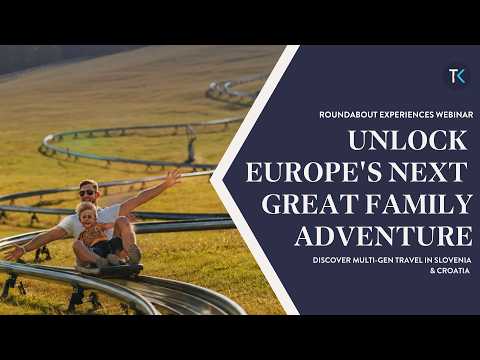
Family Adventures in Croatia & Slovenia
In this Travel Kinship webinar, Kelly Tolliday talks to Mitja Jus of Roundabout Experiences about why Croatia and Slovenia work so well for family and multigenerational travel. From easy self driving and spectacular nature to private yachts, hands on food experiences and family friendly hotels, Mitja shows how to design trips that work for every generation, from young children to grandparents.
Connect me with Roundabout Experiences
What you will learn
Why Slovenia is emerging as one of Europe's most exciting new luxury destinations
How easy it is to self drive through Slovenia and Croatia
Family adventures, from kayaking, rafting and cycling to exploring caves
Hands on food experiences, including farm visits, cooking classes, fishing, truffle hunting and oysters
How to combine Croatia's coast and islands with Slovenia's mountains, lakes and countryside
Yacht, catamaran and private boat options, plus experiences such as vintage car tours and a private concert in a cave
Choosing family friendly hotels, how quickly the team responds, and the best months to travel
Planning a family trip to Slovenia and Croatia: key questions answered
Is Slovenia a good destination for a family holiday?
Yes. Slovenia is safe, green and compact, and most of its adventures are soft adventures that suit young children and grandparents alike. Mitja recommends Ljubljana as a base so the family is not packing and moving every day: Lake Bled is about 45 minutes away, Postojna Cave about 50 minutes, and the coastal town of Piran about an hour further. The Slovenian border is also only around an hour and 20 minutes from Venice airport.
What hands on experiences work for every generation?
Roundabout builds family trips around experiences everyone can join. In Slovenia that can mean an eco farm stay where children help in the stables and see cheese being made, a fish farm visit with a cooking class, or a shepherds' visit in the Logar Valley. In Croatia it can be truffle hunting staged as a surprise, a morning fishing trip followed by a picnic on a private island, an oyster farm by boat, the Blue Cave, or a vintage car tour through Istria with tastings along the way.
How do you combine Slovenia and Croatia in one trip?
The two countries work as one destination. Ljubljana to Zagreb is about an hour and 15 to 20 minutes, Zagreb to the Plitvice Lakes about two hours, and from there it is around an hour and a half to Zadar, the first gateway to the islands. Split is the main starting point for the famous islands, with Dubrovnik a little further south. On the coast, families often enjoy island hopping by yacht, catamaran or private speedboat, because the islands are close together and the Adriatic is ideal for sailing.
When is the best time to visit Slovenia and Croatia with children or grandparents?
Mitja recommends April, May, June, September and October. July and August are hot across Europe and getting hotter, which is harder on young children and older travellers. The shoulder months also make it easier to enjoy the coast and the national parks away from the busiest weeks.
Can advisors book a single excursion with Roundabout Experiences?
Yes. There is no minimum service, so advisors can book a single day tour or a shore excursion, including for one family. As well as offices in Ljubljana and Zagreb, Roundabout has operational teams in Dubrovnik, Split, Zadar, Šibenik and Istria and its own guides, and covers the Adriatic ports from Slovenia to Montenegro. In about 95% of cases advisors get a first response within 24 hours, and a full quote usually takes around two days once the details are in.
Questions advisors asked Mitja
Is it safe to drive on your own in Slovenia?
Yes. Roundabout runs many self drive programmes. The roads are very good and well marked, and the team arranges the rental car to the client's preferences along with every reservation, experience and contact, so clients simply drive themselves between the places that have been planned for them.
About Roundabout Experiences
Roundabout Experiences is a boutique DMC for Slovenia and Croatia, with its head office in Ljubljana, an office in Zagreb and local teams along the Croatian coast. Travel Kinship represents Roundabout Experiences to travel advisors. Discover Roundabout in Slovenia and Croatia, or contact Travel Kinship for an introduction.
Full Transcript
Kelly: My name is Kelly Tolliday, and I'm the Managing Director of Travel Kinship. We are a representation company specialising in luxury boutique DMCs around the world, as well as a collection of boutique nature based properties, and you can see them all on our website, travelkinship.com. Today we're here to learn from Mitja, the managing partner of Roundabout Experiences, your in destination specialist and support team for Croatia and Slovenia. We'll be talking about multigenerational and family travel through Croatia and Slovenia. Families are travelling differently than ever before, and farther than ever before, and multigenerational travel continues to be one of the fastest growing segments in luxury travel. Croatia and Slovenia are quickly becoming two of Europe's most rewarding destinations for families looking for meaningful experiences across the generations. So how do we keep everyone happy, from the two year old to the 90 year old? That's what Mitja is going to share today. If you have questions during the webinar, please put them in the questions box, and we'll get to them at the end.
Mitja: Thank you again for joining and taking the time for this webinar. I hope you will hear some new and useful information. My name is Mitja, and I'm the co-owner of Roundabout Experiences. Today we're going to focus on Slovenia and Croatia and on multigenerational travel. But first, a few things about us. We have been on the market for 21 years, and we started very differently from what we are today. First we were a local tour operator running scheduled daily tours in Slovenia. That went well, so we expanded to Croatia and later even to Serbia, and this gave us the background for where we operate today. Over time our focus changed a lot. About ten years ago we wanted more: different and more demanding requests, more demanding clients. So we started to specialise in FIT travel, and today we are very different. We are a boutique, high quality DMC for Slovenia and Croatia, a Signature Travel Network preferred partner, an XO Private preferred partner, and a proud DMC under the Travel Kinship umbrella.
If I had to explain us in one sentence: we are a DMC primarily for Slovenia and Croatia that focuses on creating unique, authentic and exclusive experiences in the region. With these experiences we want to be fresh and different. We want to be known for our creativity and our personal approach, and sustainability is an important part of how we operate.
Before we move on to multigenerational experiences, a quick overview of what we specialise in. That is FIT travel. We are still creating many different experiences all around the region, because we believe experiences are the best way to get to know a place. Our speciality is small groups. We handle large groups as well, but with small groups we can really showcase the best ways to experience a location. We organise a lot of sailboats, catamarans, yachts and gulet yachts for many different travellers and budgets. We do a lot of honeymoons, some destination weddings and incentives too. And to offer the best possible service and experiences, we also need the best partners, meaning the best accommodation and properties, because we always like to surprise, to exceed expectations and to include something clients don't know about.
Today we're talking about Slovenia and Croatia, our main destinations. We also do more and more in Montenegro, and Albania has become very popular for us in recent years. We do Bosnia, Serbia and North Macedonia too, but not as much. American travellers have started to discover them, but they are still a few years behind.
Everybody knows Croatia, and in recent years it has become known as a newer luxury destination with the most amazing coastline. Slovenia, on the other hand, is getting more and more recognition as one of the greenest, cleanest and safest countries in Europe and in the world. We like to see the two countries as one destination. It's very easy to travel from one to the other, and in my opinion it's a perfect destination with something for everybody: different traveller types, different ages and different generations.
Because you probably know more about Croatia, let's start with Slovenia. Slovenia has always been under the radar and underestimated, mostly because of its size. We know it's hard to find on the map, especially for American travellers. But it's a very diverse country with a lot to offer. One of its strongest points is that it's one of the safest countries in the world. It's one of the greenest, with most of the country covered by forest, and one of the most sustainable. It's a very strong culinary destination and an amazing wine destination, although today we're not focusing on wine, so I'll talk a little less about wine culture this time.
We all know that today the new luxury is getting away from the crowds and finding something new and different, and we believe Slovenia is that new destination, the new luxury that well travelled travellers are looking for. It also offers very good value for money. So what are the key highlights of Slovenia? It's very easy to explore. As well as being really safe, it's easy to travel there from Italy, Croatia or Austria. It's also extremely diverse. In a very small territory, four landscapes meet: the Alps, rivers, the Pannonian plains and an amazing underground world, with more than 10,000 caves in Slovenia alone. It's one of the cleanest countries, and it's ideal for people looking for adventure, gastronomy and wellness. When we talk about adventure, it's soft adventure, suitable for children and for older travellers.
Let me show you how Slovenia flows, so you can picture where the most important sites are. Lake Bled, our alpine jewel, is in the north of Slovenia, but only a 45 minute drive from our capital, Ljubljana. Ljubljana is one of Europe's most charming capitals. I can say that for sure because I live here. It's a beautiful city where everything is within walking distance and life happens on the banks of the river. Our clients, and especially families, usually use Ljubljana as a base to discover the rest of Slovenia, so they don't move too much from one hotel to another. We all know that with kids, or as we get older, we don't like to pack and move a lot. So Ljubljana is ideal, right in the middle of Slovenia. A 50 minute drive away is Postojna Cave, a spectacular cave with millions of stalagmites and stalactites. Another hour away is our Mediterranean jewel, Piran, a beautiful town with Venetian architecture. We are very close to Italy here. For example, the Slovenian border is an hour and 20 minutes from Venice airport, so it's really easy to reach.
As well as the must see sites, especially for families we very often go away from the crowds to quieter places, although Slovenia will never be really crowded. We discover beautiful valleys and mountains in the alpine region, visit our second city, Maribor, home to the oldest vine in the world, or go to the Bela Krajina region, where you get the most authentic experience. You won't see other tourists there, and you will feel like a local. For those who like wine, on the border with Italy we have our best wine region, Goriška Brda, known for wines that appear in world top 100 lists. Half of Slovenia is wine country, in fact. Goriška Brda is an hour and 50 minutes from Venice Marco Polo airport, so you can see how close everything is.
Kelly: Sorry, Mitja, before you move on, a question came in for exactly this slide, so I won't wait until the end. Is it safe to drive on your own here?
Mitja: Very good question. We actually do quite a lot of self drive programmes. When I talk about how safe the country is, that includes how safe the roads are. We have very good, well marked roads, and it's easy to drive around Slovenia. A lot of people who like to be on their own decide to drive themselves. We arrange everything: all the reservations, all the experiences and all the contacts, and the rental cars based on the preferences you give us. Then they drive on their own. It's very easy for us to do.
Kelly: Awesome. Thank you.
Mitja: As I mentioned, Slovenia is a very strong culinary destination. Over the last two decades everything has really evolved. Farm to table is the standard here, and we are very particular about what we put on the plate. We have developed many different experiences and tastings that are interesting for kids, parents and grandparents, and that also connect you with the culture and show how life was 150 years ago. Because our nature is so clean, with clean pastures and clean air, we have perfect conditions for making great cheese, and you can see cheese being made and try many different cheeses all around Slovenia. We also have a lot of eco farms, where we very often accommodate families, so they can learn about life on the farm. Kids go into the stables, learn how to milk, and see how cheese and meat products are made. Basically all the experiences I'm presenting today are interactive, and the kids especially love to take part. For example, there's what we call the Mediterranean workshop, where we visit a sea bass fish farm and learn how the healthiest possible fish is raised in a controlled way. Then there's a cooking class, where we learn what to look for when buying fish at the market and how to prepare some fish dishes.
I'll go relatively quickly through the experiences, and of course this is far from everything we offer. In the follow up email you'll receive more of our portfolio, so you can see everything we have created around the region. We don't want to be too long today, because once I start talking it's hard to stop me.
Another experience is with the shepherds in the Logar Valley, one of the most beautiful valleys in Europe, where you can learn about the life of the shepherds, who still live there. We can organise medieval or traditional rural games in the countryside near Ljubljana. We have experiences that revive old crafts, like print works, repairing hats or umbrellas, or making jewellery together. Again, everyone can take part. These are really great experiences for families and for multigenerational clients, because everybody can find something of interest.
In Slovenia it's all about nature. As I mentioned, everything is green: most of the country is forest, the rest is grassland and a few villages, because there are only two million of us. Everywhere you can have a sports experience or a fun experience. We can go bear watching or bird watching, and I think there are very few countries more perfect for hiking or cycling than Slovenia, at many difficulty levels, so kids and grandparents can go. We have e-bikes everywhere, and everything is really picturesque and safe. There are many routes where you won't meet a car. I know, because almost every weekend I go cycling with my kids, and we're always looking for ways to get away from the traffic. We are also very fortunate with water. We have a lot of rivers, lakes and waterfalls, so there are plenty of options for whitewater rafting, kayaking and canoeing. You can explore the countryside on horseback, or explore the underground world in many different ways, either in proper gear or at an easy pace. About 250 caves are open to the public. You can't go underground by yourself, but everything is controlled and safe. We have an experience called Forest Melody, a premium picnic in nature, where the family can connect, the kids can run around, and everyone enjoys local products. For those who are a little more adventurous, we have an amazing experience kayaking through abandoned mine tunnels. Again, it's very safe. I did it with my kids.
When it comes to hotels, we are always very careful about what we choose for families or for groups of different generations. We always choose hotels that offer connecting rooms, are set in nature, and have peace and different options for dining outside, for example in the Alps near Lake Bohinj, and of course many more.
That's a quick overview of Slovenia. I hope you learned something new about our very small country. I said we were underestimated because of our size, but I assure you we can create a 14 day itinerary where every day is completely different. We have a lot of diversity and a lot to offer.
Now let's move on to Croatia, which most of you know a lot better and may already have sent clients to, but which is still a newer luxury destination. I have nothing against Spain, Italy or France. I love those countries. But we all know some places there can get really overcrowded, and Croatia is not there. I believe it's great value for money. It isn't cheap, and you can also find very expensive experiences and properties, but Croatia is just perfect for island hopping, which families really enjoy. Island hopping is easy because the Adriatic is perfect for sailing. The conditions are probably the best, the islands are close together, and you can always find a private island or a private lagoon to jump into the water. So it's really great for yachting and sailing, and we do a lot of luxury speedboat tours.
But it's not only sea and beaches. Croatia is a very strong gastronomy destination with beautiful cultural experiences, and we have amazing UNESCO gems like Dubrovnik, Split and the Plitvice Lakes. There's a lot to see, again in a relatively small territory.
Here you can see how Croatia flows and how close everything is. Zagreb is very close to the Slovenian border: it's an hour and 15 to 20 minutes from Ljubljana to Zagreb. From Zagreb it's only about two hours to our number one natural site, the Plitvice Lakes, then another hour and a half to Zadar, the first starting point for the islands. Then there's Split, the main starting point for visiting the famous islands, and a little further is Dubrovnik. A lot can be done, based on preferences, budget and the pace the clients want to travel. We always need as much information as possible about the clients, the group or the family and what they like, so we can create the best possible itinerary.
As well as the most popular sites, we always want to visit less known, less commercial places, because I believe there you get an even better experience if you want to get away from the crowds. But again, the crowds are nowhere near what you get in Tuscany, Barcelona or Paris.
Gastronomy is very strong in Croatia, and it's a strong wine destination too, but we'll talk about wine another time. I need to emphasise again that farm to table is the standard everywhere you go with us. We love organising private picnics, private lunches and dinners in nature, in the vineyard or on the farm, and the most important thing is to provide really premium, nutritious local products.
I love our experience on the UNESCO listed Stari Grad Plain on Hvar, where we organise a sunset dinner or a cooking class. I forgot to mention that we do a lot of cooking classes all around the region, and it's becoming one of the most popular experiences for families. We do a lot of oyster experiences. It's maybe not for the kids, because very rarely do kids eat oysters, or even parents, but even if they don't eat them, it's a lovely experience. We go out on a boat with nobody around, they learn what an oyster farm looks like, and then we pull the freshest possible oysters from the sea, open them and try them with local wine and olive oil, which is another very important local product. Even for those who don't drink wine or eat oysters, it's a really nice experience for the kids.
Another very interesting one for the kids is truffle hunting, because the dogs are really lovely, even though not everybody eats truffles. As I mentioned, we like to surprise, so we usually do truffle hunting as a surprise: we accidentally run into a woman with a dog, ask her what she's doing, she explains she's looking for truffles, and we ask if we can join. Of course we join, we find the truffles together, and then we can use them later in a restaurant, or organise another cooking class to learn how to make a local dish with truffles. It's always about the dynamics, about learning new things and how people live there.
Then there's the fishing adventure, which is very nice. We go out in the morning, catch some fish, then go to a private island or a private part of an island and have a picnic. Kids love it, and the thing they're most interested in is cleaning the fish, where they learn what the inside of a fish looks like. For every generation, the Blue Cave never gets old. Everybody loves it, whether you're 6 or 96. We do sea kayaking under the Dubrovnik walls, which you can combine with a Game of Thrones tour for the younger generation, although they may not be that young any more, because it was about 15 years ago.
Again, there's great nature and great possibilities for outdoor experiences, like a buggy adventure on one of the islands, exploring the countryside by buggy and finishing on an eco farm with local products and local meals. We can do family whitewater rafting or kayaking on a river near Split, and the best thing is that when we finish, we prepare an evening picnic under the stars, around an open fire, where the family can really connect.
Visiting Plitvice Lakes National Park is of course a must for everybody. For those who want an activity rather than an adventure, we have a sunset hike near Dubrovnik, an easy 45 minute walk up a nearby hill, where a premium picnic is waiting with the best possible view down over Dubrovnik, again with the best local ingredients.
Croatia is also very strong culturally, and we still preserve our customs. There is an ethno village where you can learn how life was 150 or 200 years ago, and it feels like being put into a film. Another great place is the Roman arena in Pula, in Istria, one of the biggest Roman arenas in the world and one of the best preserved, and it's perfect for concerts. Last month I was there listening to Sting, and it was amazing.
A few examples of hotels, at many different levels. One of my favourites is a resort on the coast with family villas, connecting rooms or rooms together. There's a more secluded kind of luxury property on Dugi Otok. Another favourite is San Canzian Village, where again you feel as if you're living 100 years ago. It's in the heart of the Istrian peninsula, where there are many possibilities for experiences, from gastronomy to activities.
It's also important to say that we are present along this part of the Adriatic, and we organise all kinds of shore excursions from Slovenia to Montenegro. We are present in all the ports, so even for one family or a small group, we are very happy to organise suitable experiences for your clients.
And to touch briefly on high end luxury experiences, because we're not only talking about kids and grandparents: I mentioned the underground world and Postojna Cave. What we like to do is privatise the cave. We are great partners with the underground park, and we organise a visit between the regular visits, so you don't see anybody else in the cave, and then we surprise you with a private concert, a saxophone player, a violinist or maybe a harpist. For those who love wine, I'm happy that for the second year we now have three wineries on the Istrian peninsula with helipads, so you can travel by helicopter from one winery to another. One of our most popular experiences is chef on deck: on your own catamaran or yacht, we surprise you by bringing a very good Michelin chef on board to cook in front of you. And one of my favourites, especially for families, is Vintage Gourmet, where we take vintage cars to discover the countryside. It's great fun for all generations, all bumpy and loud because of the old motors, and we stop for olive oil tasting, wine tasting for those who want it, and truffle hunting. So we do a whole mixture.
We don't want to be too long, so let's move on to some practical information. We don't have a minimum service requirement. You can book just one short excursion or a one day tour with us. That's because, as well as our main office in Ljubljana and the second one in Zagreb, we have operational teams all around the country, in Dubrovnik, Split, Zadar, Šibenik and the Istrian peninsula, so we can react really quickly. We also have our own guides, and we put a lot of energy and effort into having the best possible guides. So it's easy for us to organise a one day tour, and we know that if you book one short excursion with us, one day you will end up booking more. Our mission is to make you look great in front of your clients. We know we need to be fast, and in about 95% of cases we give a first response within 24 hours. Once we have all the details we need for an itinerary, we need about two days for a complete quote. I admit it sometimes takes longer, for example when we are waiting for suppliers to confirm availability, but in the big majority of cases we are that quick.
When is the best time to travel? I would say May, June, September and October, especially for kids and for older travellers, because we all know that in July and August the whole of Europe is hot, and it's getting hotter. In recent years I would really recommend April too. So April, May, June, September and October are perfect months for multigenerational travel.
And one last thing: if you're around this year, we'll be at the Synergy conference in Croatia at the end of September. We'll also be at a road show in Los Angeles in two weeks, covered by Nika and Petra, and I'll be with my partner and best friend at the Signature conference in Orlando in November. I think that's it. I hope you enjoyed it.
-
 • 3/11/26
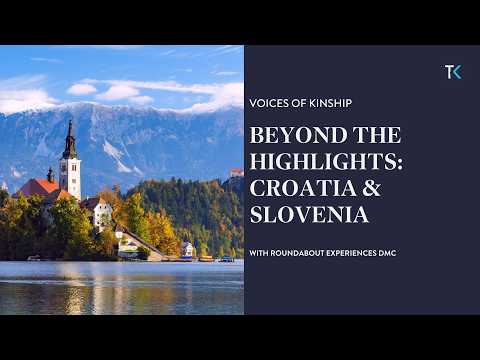
From Tour Guide to CEO with Mitja Jus
In this Voices of Kinship episode, Kelly Tolliday talks to Mitja Jus, managing partner of Roundabout Experiences, a boutique DMC for Slovenia and Croatia. Mitja tells the story of his journey from tour guide to running a tailor made DMC, and explains what makes the two countries special beyond the famous highlights.
Connect me with Roundabout Experiences
Prefer to read? Read the full Voices of Kinship article: From Tour Guide to CEO: The Roundabout Experiences DMC Story
What you will learn
How Mitja started as a tour guide more than 20 years ago, and how Roundabout grew from small group day tours into a bespoke DMC
Why Croatia is far more than its coastline, with culture, history, wine and inland towns
Why Slovenia, with its mountains, coast, caves and vineyards, is one of Europe's most diverse small countries
Two countries, one destination: combining Slovenia and Croatia in a single trip of around 12 to 14 days
Signature surprises, from wine at sunset on Dubrovnik's city walls to a private concert inside Postojna Cave
Supporting small farmers, winemakers and family run businesses rather than mass tourism
His advice to advisors: slow down, go beyond the checklist and share your clients' interests
Planning Slovenia and Croatia: key questions answered
What makes Roundabout Experiences different from other DMCs in Slovenia and Croatia?
Roundabout began more than 20 years ago with small group day tours from Ljubljana and grew into a tailor made DMC focused on experiences. Mitja Jus started as a tour guide himself, so the team invests heavily in having the best guides. Long relationships with winemakers and local producers mean clients are welcomed like friends, and those partners help the team create new experiences, handle changes on the road and add surprises clients do not expect.
Is Croatia more than its coastline?
Yes. Seeing the coast by speedboat, sailing boat or yacht is a must, and there are more than a thousand islands, but Mitja stresses that Croatia is also culture, historic towns and food. Heading inland takes clients away from the crowds to a very different side of the country.
How long should clients spend in Slovenia and Croatia together?
Mitja suggests 12 days as a starting point and 12 to 14 days as ideal, which gives time to show the best regions and experiences rather than just the most famous places. It can be done in 10. The two countries work as one destination: they share a history, are both very safe and are easy to travel between.
What kind of surprise experiences does Roundabout create?
Roundabout is popular with honeymooners for its surprises: a bottle of wine at sunset on Dubrovnik's city walls, a picnic on a local fisherman's boat, or a dinner in the vineyards. In Slovenia, the team arranges a private visit to Postojna Cave between the public tours, with a surprise concert by a saxophone or violin player among the stalactites.
How does Roundabout Experiences approach sustainability?
For Roundabout, sustainable travel is simply the standard. The team avoids mass tourism, works with local suppliers and restaurants that use local ingredients, and supports small farmers and family wineries, so the money stays with the people at the heart of the country. Farm to table is close to the norm in Slovenia, and guests are encouraged to drink the excellent tap water rather than bottled water.
About Roundabout Experiences
Roundabout Experiences is a boutique DMC for Slovenia and Croatia, with its head office in Ljubljana, an office in Zagreb and local teams along the Croatian coast. Travel Kinship represents Roundabout Experiences to travel advisors. Discover Roundabout in Slovenia and Croatia, or contact Travel Kinship for an introduction.
Full Transcript
Kelly: Welcome to Voices of Kinship, a podcast by Travel Kinship, where we sit down with the people shaping travel from the inside out: the founders, the fixers and the local experts who believe that how we travel matters just as much as where we go. Today's conversation takes us to Croatia and Slovenia, two destinations often seen as emerging but deeply rooted in culture, history and place. I'm joined by Mitja, managing partner of Roundabout Experiences, a destination management company known for designing thoughtful, experience led journeys across the region. We'll talk about how he came to Roundabout Experiences, what makes Croatia and Slovenia special beyond the highlights, and how tourism there is changing. Thank you so much for joining us.
Mitja: Everything started more than 20 years ago. My best friend, who is now my partner, actually founded the company. I wasn't the founder. I started working for the company as a tour guide. That was an important moment for me, because having worked as a guide in the early years, I believe the guide can really make a difference. So we put a lot of focus, energy and time into having the best team, the best guides and the best possible experience overall. I started as a guide and very soon became a partner.
At that time we had two brands, Roundabout Travel and another for Slovenians travelling abroad, but very soon we focused on incoming travel. The beginning was very different from today. We started as a local tour operator running scheduled daily tours, first in Slovenia, from Ljubljana, the capital. That went well, so we expanded to Croatia and later even to Serbia. That gave us the background for where we operate today, with Slovenia and Croatia as our main destinations, plus a lot of knowledge of the neighbouring countries of the former Yugoslavia, which are slowly becoming more popular with our clients too.
Back then the destination was fairly well known, but travel everywhere was the same: bus tourism, bigger hotels, the same experience for everybody. Even with our small group scheduled tours, we wanted a better experience: smaller groups, each with a different, very engaged guide, more flexibility and more personalisation, even in set tours. That philosophy has stayed, much upgraded, until today. We wanted to show different places and more authentic experiences, and the whole travel industry in these countries has changed a lot.
After years as a successful operator of scheduled tours, our partner network grew, and new partners brought new requests. When we started working on private tour requests, we realised that this was where we wanted to grow, with more demanding guests and more demanding requests. It all happened organically, and at some point we decided to make FIT our main focus: really personalised tours and experiences, listening to our clients and offering the best possible experience of the destination. Soon after that shift, we were invited by Signature Travel Network to become its destination specialist for Slovenia. Honestly, at the time we didn't even know what Signature Travel Network was. After some research we realised it's a big deal, one of the two main consortia for luxury travel, especially in the Americas, and we were very happy to accept.
Where we stand out is that we have always wanted to be different and offer something more. When we became a DMC, we saw that a lot of DMCs in luxury travel do very similar things, and we wanted to find our own way. We did a brand evaluation and a lot of workshops, and we defined that what we are good at, and passionate about, is creating experiences. Since becoming a preferred supplier for Signature and focusing on the American market, we have concentrated on creating unique, exclusive and authentic experiences in the region, staying different and fresh, and sustainability has always been an important part of how we operate. Because we want to be creative and offer more, we learned that we need as much information as possible about the client. So we build very good communication with advisors and learn the client's preferences, wishes and past travel experiences, and from that we create a tailored, personalised itinerary.
That's even more important now, because tourism has grown and evolved over the last two decades, and in both countries it's easy to end up with an average experience or average suppliers. What drives us is client and partner satisfaction, and because we do everything for the long term, we need really good relationships with our suppliers. The best feeling is when you arrive at a winemaker or a local producer with clients, you greet and hug each other, and the clients see that close relationship and how much everyone wants to make them happy. That's where we win. Good relationships also make it easier to be creative and create new experiences, and to handle change, whether it's the weather, something on the road or altering an itinerary. You need partners who are willing to do that with you. And we love to surprise and exceed expectations, often by including something the clients don't know about, which again needs a willing partner.
Croatia has become really well known as a luxury destination in the last ten years, for its amazing coastline. Game of Thrones gave it a big push 10 to 12 years ago, and it's now a top destination, especially for Americans in the last five years. Slovenia is getting there too. It's on the radar as one of the greenest, cleanest, most sustainable and most diverse countries. Croatia has its coastline and more than a thousand islands. Slovenia, although it's small, is very diverse, from the mountains to the coast to the Karst region, with more than 10,000 caves, and the Pannonian plains. A traveller once told me that in Slovenia the landscape changes every five minutes and everything is Instagrammable. It sounds cheesy, but it's true. More than 60% of the country is forest, and we are very fortunate with water, with lakes, rivers and waterfalls, which is great for the outdoors.
What's special about us is that we see both countries as one destination. We lived in the same country 30 years ago, and we are connected culturally. Both countries are very safe. Slovenia is one of the safest countries in the world, which is a luxury today and a very good selling point, and Croatia is very close and easy to travel around, with good roads. I don't believe there is another territory as diverse, with as much to offer, as Slovenia and Croatia together. We have a rich history and culture, influenced by our Venetian and Austro-Hungarian past. Not everyone knows that we are a strong culinary destination, and even fewer know we are a strong wine destination. We don't have large producers like Italy or Spain, but because of the terrain we have thousands of small ones, and everywhere you meet the winemaker and hear the story. We can do blending sessions and tastings in many different kinds of places.
The biggest misunderstanding about Croatia is that it's only the coast, the sea and sailing. Experiencing Croatia by speedboat, sailing boat or luxury yacht is a must, but it's also culture, historic towns and food, and on the mainland you get away from the crowds and see a very different Croatia. Slovenia is the same, just much less known. Slovenia has always been underestimated because of its size, and we're OK with that. It's hard for Americans to find Slovenia on the map, but everyone is surprised by how much it offers, and people who have visited know they need to come back for more days.
For the ideal length, I would say 12 days to start with. We can do it in 10, but 12 to 14 days gives us lots of opportunity to show the best regions and experiences, and not necessarily the most expensive things.
We've become quite popular with honeymooners, maybe because of our surprises: surprising a happy couple on top of Dubrovnik's walls with a bottle of wine at sunset, or with a local fisherman's boat and a picnic on board. We love organising picnics and dinners in the vineyards. One of the best surprises is in Slovenia. Postojna Cave is one of the most visited caves anywhere, and in popular places we've learned how to get away from the crowds. We organise a private visit between the public tours, with no one else there, and surprise guests with a private concert, a saxophone or violin player, with amazing acoustics among the stalactites and stalagmites. For Americans it's usually Amazing Grace, and everybody gets chills, or even tears.
We don't even promote sustainable travel any more, because for us it's simply the standard, and Slovenia has always been one of the most sustainable and cleanest countries. We are very good at recycling, and we tell guests not to buy bottled water, because the tap water is better and healthier. We move away from mass tourism, which doesn't give enough back, and we always work with local suppliers and with restaurants that use only local ingredients, supporting the small farmers who grow the best produce. Farm to table is almost standard here, because it's how we grew up: everyone has a grandmother or grandfather with a garden. Supporting small local businesses brings the most passion and the most authentic experiences. They are the heart of the country.
My advice to advisors and travellers is to give both countries more time. Don't just tick off the best known places. Learn what your client wants and share it with us, and we'll give you an itinerary that is different, more meaningful and more rewarding than just seeing the famous places. There is much more to both countries than you think, so let us share that knowledge.
The easiest way to reach us is by email. We have an amazing sales team who will work with you, and advisors usually continue working directly with them, so I'm not even the middleman. I'm very thankful for our team. They are knowledgeable and passionate, and they will do everything to make your clients happy.
Kelly: Thank you, everyone, for listening. If you have questions, email Travel Kinship or Roundabout Experiences directly, and we'll connect you with the right team member. Thank you so much, Mitja.
-
 • 2/12/26
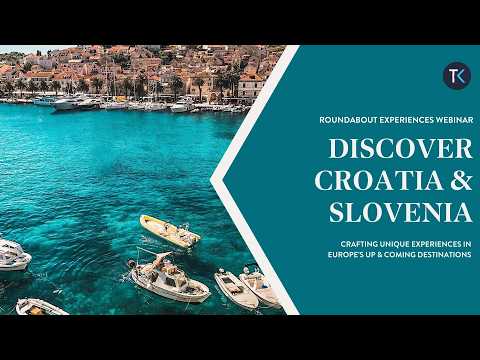
Croatia & Slovenia: Culturally Rooted Luxury
In this 40 minute Travel Kinship webinar, Mitja Jus of Roundabout Experiences takes travel advisors on a deep dive into Slovenia and Croatia. He covers the places to see, the signature experiences his team creates, where to stay, and how Roundabout supports advisors from first enquiry to the end of the trip.
Connect me with Roundabout Experiences
What you will learn
Slovenia's highlights: Lake Bled, Ljubljana, Postojna Cave, Piran and the Goriška Brda wine region
Croatia's coast and islands, from Split and Hvar to Dubrovnik, explored by sailboat, catamaran or private yacht
Food and wine: small family winemakers, Istrian olive oil and truffles, and oysters from Ston
Signature experiences, from a private after hours concert in Postojna Cave to helicopter winery hopping
Boutique and castle hotels in Slovenia, and luxury resorts on the Croatian coast
How Roundabout works with advisors: a first reply within 24 hours on working days, no minimum spend, and its own local teams and guides
Planning Slovenia and Croatia: key questions answered
What are the must see places in Slovenia?
The classic highlights are Lake Bled, with its castle and island church about 45 minutes from Ljubljana, the walkable capital itself, Postojna Cave about 50 minutes away, and the Venetian style coastal town of Piran. Mitja Jus also recommends going beyond them: to the Alpine valleys, to Maribor and the oldest vine in the world, to the remote Bela Krajina region, and to the Goriška Brda wine country on the Italian border, about an hour and 15 minutes from Venice airport.
What is a good route through Croatia?
A typical route runs from Zagreb, about an hour and 15 minutes from Ljubljana, to the Plitvice Lakes, then to Zadar, on to Split, the gateway to islands such as Hvar, and down to Dubrovnik. Roundabout also takes clients beyond the busiest places, to the Pelješac peninsula, Korčula and other islands and wine regions, and plans at least part of every Croatia trip on the water.
Why is Istria a highlight for food and wine lovers?
The Istrian peninsula, shared by Croatia and Slovenia, is famous for its olive oil and its truffles. Roundabout's experiences there include a truffle hunt that begins as a chance meeting with a truffle hunter and her dog, vintage car tours through the countryside with olive oil and wine tastings, and helicopter hops between wineries that have their own helipads.
Where do clients stay in Slovenia and Croatia?
Slovenia has little ultra luxury but excellent luxury boutique properties, often family owned, in nature or in town, such as Zlata Ladjica in Ljubljana, and some castles where guests can stay, including a five star castle hotel. In Croatia, Mitja's examples include Maslina Resort and Palace Elisabeth on Hvar, Hotel Korta Katarina, and San Canzian Village in the heart of Istria.
What makes a day at sea in Croatia special?
Croatia's islands are close together and ideal for sailing, so Roundabout arranges sailing boats, catamarans, gulets and luxury yachts, as well as speedboat days. Highlights include a sunset sail to a secret spot for a private picnic, a beach club on a remote island near Dubrovnik reached by private speedboat, a Michelin chef cooking on deck with fresh oysters delivered by a local boat, and sea kayaking beneath Dubrovnik's city walls.
About Roundabout Experiences
Roundabout Experiences is a boutique DMC for Slovenia and Croatia, with its head office in Ljubljana, an office in Zagreb and local teams along the Croatian coast. Travel Kinship represents Roundabout Experiences to travel advisors. Discover Roundabout in Slovenia and Croatia, or contact Travel Kinship for an introduction.
Full Transcript
Kelly: Over the next 40 to 45 minutes we're going to learn about Croatia and Slovenia. Travel Kinship is the representation company for Roundabout Experiences, and I'm Kelly Tolliday. We represent some of the world's most unique, culturally rooted DMCs that also offer seamless luxury experiences, with sustainable luxury travel, wellness, adventure, and cultural and culinary experiences at our core. Today I'm introducing Mitja, managing partner of Roundabout Experiences, which specialises in travel throughout Croatia, Slovenia and across the Adriatic. We're taking a deep dive into the unique and private experiences your clients can have across the region. Please use the questions box, and we'll save questions for the end.
Mitja: My name is Mitja. It's easier if you replace the J with a Y. I'm the owner of Roundabout Experiences, a boutique DMC primarily for Slovenia and Croatia, and we've been on the market for about 20 years. We started as a local tour operator running small group scheduled daily tours, first in Slovenia, then expanding to Croatia and even Serbia. At some point that wasn't enough. We wanted more demanding products and clients, and we evolved into the boutique DMC we are today. We are a destination specialist for the Signature Travel Network and part of XO Private, and we're proud that Travel Kinship represents us in the American market.
In one sentence, we are a DMC for Slovenia and Croatia focused on creating and designing unique, authentic and exclusive experiences in the region. We want to be different and fresh, and to be recognised for our personal approach, creativity and sustainability. We specialise in FIT travel, meaning individual travellers, families and small groups, and we handle large groups too. In Croatia we arrange luxury yachts, gulets, sailboats and catamarans, because you should experience Croatia from the sea for at least part of the journey. We do a lot of honeymoons, because our mission is to surprise and exceed expectations, a few destination weddings a year, where we work with partners and handle the logistics and experiences rather than the planning, and incentive travel. We work with our own carefully selected accommodation, because we need to trust the people we create experiences and surprises with.
Both countries sit almost in the middle of Europe, in a very good location. Besides Slovenia and Croatia, Montenegro and Albania are getting more popular, and we also operate in Bosnia, Serbia and North Macedonia, which are less popular with the American market so far. I like to see Slovenia and Croatia as one destination. We were part of the same country 35 years ago, and together they're the perfect destination: Slovenia very diverse and all about nature and sustainability, and Croatia known for its amazing coastline and more than a thousand islands.
Slovenia was under the radar and underestimated because of its size, but it's getting on the radar as one of the safest, greenest and most sustainable countries in the world. It has remarkable diversity. Four landscapes meet in one small country, from the Alps to the coast, the underground world of the Karst and the Pannonian plains. It's the perfect new destination for well travelled clients looking for something new, and it's very good value for money. It's very safe, easy to explore and easy to combine with Croatia, northern Italy or Austria. It has Alps, lakes, vineyards, Karst caves and even a coast, with more than 10,000 caves, about 250 of them open to the public. It's one of the most sustainable and cleanest countries, and a strong culinary and wine destination.
The must see places start with Bled, an alpine jewel: a lake with a castle above it and a tiny island church, about 40 to 45 minutes from Ljubljana. Ljubljana is a charming, very safe capital, arguably one of the greenest in the world, where everything is walkable. Postojna Cave is about 50 minutes from Ljubljana and is one of Europe's most famous caves. And Piran is a Mediterranean town that looks Venetian. Beyond the famous places there are beautiful mountain valleys; Maribor, our second city, with the oldest vine in the world, more than 400 years old and still producing; the remote Bela Krajina region, where you won't see other tourists and get the most authentic experiences; and the Goriška Brda wine region on the Italian border, about an hour and 15 minutes from Venice airport, which is often the first stop for clients flying into Venice.
In Slovenia, gastronomy is the most important thing for us. Slovenia isn't known as a wine country only because we don't have large producers. We have thousands of small ones, so you meet the winemaker and hear the story. We do wine trails and tastings, sometimes combined with off road vehicles or an e-bike tour, with a surprise meeting with the winemaker and a picnic in the vineyard under the cherry or olive trees. There's what we call the deepest dining room in Slovenia, a five star culinary experience 150 metres below the surface in an old mine shaft that no longer operates. We do culinary walking tours and cooking classes, for example at an ecological sea bass farm on the coast. For culture, there are private after hours museum visits, sometimes with dinner inside the museum, workshops reviving old crafts in Ljubljana, and stays on top of a mountain to learn about shepherd life. And for the outdoors, with more than 60% of the country covered in forest and plenty of rivers, lakes and waterfalls, there's whitewater rafting, kayaking, canoeing, ziplining, hiking, cycling, horseback riding, wellness, and even kayaking underground in old abandoned mine tunnels. Everything is Instagrammable, and the landscape changes every five or ten minutes.
For accommodation, Slovenia doesn't have a lot of ultra luxury, but it's very strong in luxury boutique properties, often family owned, either in nature, such as a family run chalet in the mountains, or in the city, such as Zlata Ladjica, the Golden Boat, in Ljubljana. Slovenia is also a land of castles, and you can stay in some of them, including a five star castle hotel. For wine, we produce white, red, sparkling and even orange wines, and there are wine estates and boutique hotels in the heart of the wine regions.
Croatia has become very popular in the last 10 to 15 years. Game of Thrones gave it a big push about 15 years ago and put Split and Dubrovnik on the map. It's a newer luxury destination with fewer crowds and good value compared with Italy or Spain, although it isn't cheap. It combines very well with Slovenia, and often with Montenegro and even Bosnia. The highlights are the spectacular coast with more than a thousand islands, perfect for island hopping, where we arrange sailing boats, catamarans, ultra luxury yachts and gulets, plus speedboat tours; amazing food; and UNESCO gems like Dubrovnik, Split and the Plitvice Lakes.
A typical route goes from Zagreb, the capital, about an hour and 15 minutes from Ljubljana, to the Plitvice Lakes, about two hours away and the country's number one natural site, then an hour and a half to Zadar, a coastal town, another hour and a half to Split, home of Game of Thrones locations and the best gateway to islands such as Hvar, and on to Dubrovnik. We also go beyond the crowds to other islands and wine regions, such as the Pelješac peninsula and Korčula.
Croatia is wonderful for food, cheese and wine. Farm to table is the standard for us in both Croatia and Slovenia. Besides wine, olive oil is very important. The Istrian peninsula, shared by Croatia and Slovenia, is one of the most northerly places where olives grow, and it is internationally celebrated for its olive oil. Istria is also rich in truffles, a paradise for food lovers. We love private dinners and lunches: a sunset dinner at a secret spot on an island with no one else around, or cooking classes and dinners in UNESCO protected areas. We taste Ston oysters fresh from the farm. And there's the truffle hunt where we "accidentally" meet a woman with a dog, join the hunt, find truffles together and then cook a local dish with them.
At sea, there's sunset sailing to a secret spot for a premium private picnic, which is perfect for honeymooners; a beach club on a remote island near Dubrovnik, reached by private luxury speedboat, with cabanas and the freshest seafood; tuna shows for groups, with sushi and sashimi from a tuna caught the night before; sea kayaking under the walls of Dubrovnik; and morning brunches. On land, clients can discover the countryside by buggy or e-bike in the national parks; go river kayaking or whitewater rafting followed by a picnic under the stars; visit the Plitvice and Krka national parks, knowing when and how to avoid the crowds; and take a sunset hike of about 45 minutes above Dubrovnik to a premium picnic with fine wines and local ingredients. We don't shy away from the history of the war either. And Pula has its Roman arena, one of the largest and best preserved Roman amphitheatres in the world.
Now some high end signature experiences. A private visit to Postojna Cave, after hours or even between public visits in busy periods, so you see no one else, with a surprise private concert by a saxophone or violin player and amazing acoustics. Amazing Grace is the favourite. Some wineries now have helipads, so we can hop between spectacular wineries by helicopter. We've landed by helicopter on a mountaintop where a Michelin chef prepared a dish with a view over the Alps. We love putting a Michelin chef on deck on a luxury catamaran or yacht for the day, with a local boat bringing fresh oysters. And we love vintage cars for discovering the countryside, for groups or individuals, stopping for olive oil tasting, wine tasting and truffle hunting.
In Croatia, some examples of where clients stay are Maslina Resort on Hvar, the boutique luxury Hotel Korta Katarina, the San Canzian village resort in the heart of Istria, and Palace Elisabeth on Hvar, and there is much more.
Our mission is to make you, our partners, look great in front of your clients. As well as giving the best service, we are quick. We give a first response within 24 hours on working days, and once we have the information we need, we take up to 48 hours to send a complete quote. We have no minimum budget or service requirement, so you can book just a single day tour or a short excursion. That's possible because, as well as our headquarters in Ljubljana and an office in Zagreb, we have operational teams in Dubrovnik, Split, Zadar and Istria, and our own tour guides, so we can react quickly. If you book one tour with us, you'll end up booking more, so test us and you'll see what it means to work with us. If your clients are happy, you're happy, and if you're happy, we're happy.
Kelly: Thank you so much, Mitja. That was awesome.