Luxury Adventure & Wildlife: Advisor Q&A
This informal fireside Q&A gives travel advisors insider access to Frank Castro, founder of Adventure International and one of the most experienced names in luxury adventure travel. Frank explains what it really takes to plan adventure and wildlife journeys for luxury clients, from summiting Kilimanjaro or trekking towards Everest to wildlife encounters in the Galapagos.
Connect me with Adventure International
What you will learn
What it is like to plan a luxury adventure such as a Kilimanjaro climb or an Everest trek
Wildlife encounters in the Galapagos
Cycling safaris, surf journeys and other active adventures
How to approach luxury adventure travel with clients
Frank's answers to real questions from travel advisors
Planning a luxury adventure trip: key questions answered
Can clients who are nervous about altitude or fitness still climb Kilimanjaro?
Often, yes, and it starts with a detailed conversation about what the client really wants. Adventure International tailors climbs to the person: a quieter way to reach the summit, a short two day trip onto the mountain without summiting, or even mountain biking down after the summit. Every climb is heavily supported, with a full crew and backup, so if someone needs to turn back, the team simply adjusts the plan. Frank's one firm request is that clients have been training for the months before they go.
How far ahead should clients book a big adventure like Kilimanjaro, Everest Base Camp or Patagonia?
Ideally six months to a year. Because much of the product is Adventure International's own, the team can sometimes turn a Kilimanjaro climb around in two weeks, but clients need time to get fit for high altitude. Some destinations also fill up early: Patagonia has a short season and Alaska is very busy, so last minute trips there are hard to arrange.
What is the best way to see the Galapagos?
Frank's favourite is privately guided, land based island hopping rather than a large cruise. Clients spend more time on each island, so they can surf in the morning and snorkel, cycle or hike in the afternoon. Charter flights and speedboats link the main islands of Santa Cruz, Isabela and San Cristóbal, with day trips by small luxury yacht and a choice of safari camps, private villas or hotels.
Can adventure travel work for multigenerational families?
Yes, with the right destination. A Kilimanjaro climb has one goal and suits a single group, but places like mainland Ecuador and the Galapagos or Peru let part of the family take on a bigger challenge while everyone shares easier moments, like a short walk to a waterfall for a swim. In the United States, Frank suggests a private house in Jackson Hole with gentle river floats and wildlife drives in Grand Teton that work from age three to eighty.
Where can clients combine mountains with wildlife?
This summit to sea idea runs through many of Frank's itineraries. In Tanzania, clients can climb Kilimanjaro, go on safari in the Serengeti and finish on Zanzibar. In Nepal, a Himalayan trek can be followed by a jungle camp in Bardia National Park, where tigers, rhinos and elephants come to the river. In Ecuador, Cotopaxi and the Avenue of the Volcanoes pair with the Galapagos, and Morocco, the newest destination, combines Toubkal in the Atlas with the desert and the coast.
Questions advisors asked Frank
Can Adventure International arrange whale shark trips in Zanzibar or Mafia Island?
Yes. Frank is clear that the team is not a whale shark specialist, but they have experience planning it and regularly build very specific client requests into Tanzania trips.
What is the biggest challenge in luxury adventure travel, and how do you balance adventure with luxury?
Frank's biggest challenge is clients who love the idea of adventure but turn out to dislike camping, so he is honest up front that even the most luxurious camp is still camping. When a trip is not working, the team pivots, for example by moving a client to a lodge by helicopter. The balance he aims for is an active, adventurous day followed by real comfort at night, with a proper bed and, where possible, a sauna or a glass of champagne.
About Adventure International
Adventure International is a boutique luxury adventure operator founded by Frank Castro. It designs trekking, mountaineering, glamping and private guided journeys worldwide with trusted local partners, and directly operates its own Kilimanjaro climbs. Travel Kinship represents Adventure International to travel advisors. Discover Adventure International or contact Travel Kinship for an introduction.
Full Transcript
Kelly: Welcome, everyone. I'm Kelly Tolliday from Travel Kinship. We are a global representation company representing boutique luxury DMCs around the world. We want to support you in creating unforgettable, seamless experiences for your clients, and the best way we can do that is by bridging the gap between you and some truly incredible DMCs in incredible destinations. Today I'm super excited to introduce Frank Castro, the founder of Adventure International, which specialises in luxury adventure travel: summiting, trekking, national parks, wildlife experiences and even surf journeys. During this session you can ask any questions about planning luxury adventure trips, whether that's summiting Kilimanjaro or Everest, wildlife encounters in the Galapagos, cycling safaris, which are being requested more and more, or surf journeys for families. This is an informal fireside chat. Your question might be about a specific client or something more general. Please add your questions in the questions box rather than the chat, and I'll read them out as they come in. Take it away, Frank.
Frank: How's everybody doing? My name is Frank Castro, and I'm one of the owners of Adventure International. As you can see from the photos, we focus on high level adventure, trekking and mountaineering, but with a lot of comfort. Our tagline is private luxury adventure.
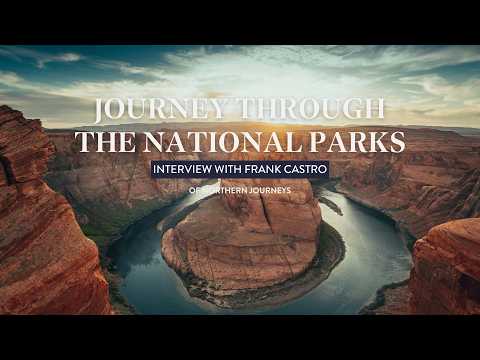
We actually have a family of brands. Over the years we've developed more product than just trekking and mountaineering. We do glamping and ecodomes under Adventure Portfolio. We started Northern Journeys, for national parks in the USA, Canada and Alaska. And as Kelly said, we've dabbled in the world of luxury surfing, with a little boutique brand called Lux Surf.
Adventure International is a premier luxury adventure outfitter, and we run white label operations for some of the top brands in the travel industry. We are a pioneer of luxury trekking and mountaineering around the world, and we've evolved into providing some pretty unique wildlife experiences and very active, multifaceted travel. Because we have our own product, crews and glamping, we can craft programmes that are proprietary and very unique, not off the shelf. We focus on depth and connection: top quality guiding, impeccable trip planning, and making sure people have their creature comforts. That's the marriage for us, highly active adventure done at a very, very high level.
One theme that combines really well in our destinations is summiting mountains and then pairing it with wildlife, or what we call summit to sea: places where you can be on top of a mountain and then find yourself by the ocean. That has become the through line in how we plan trips.
Take one of our core destinations, Tanzania. I lived there for about eight years, and it's such a multifaceted destination. You can be on top of the highest mountain in Africa, then find yourself on the plains of the Serengeti, then head to Zanzibar. Further afield, you can see chimpanzees in Mahale. What we're known for in the industry is a very high level, VIP Kilimanjaro climb. It's the heart and soul of what we do. We took that high end Kilimanjaro product and looked at how to recreate it in places like Nepal, Peru and Ecuador.
Of course, people often want an extension, and in Tanzania that means wildlife and safari. Back in the day we were young and adventurous and didn't want to sit in a car for eight hours a day, so we brought mountain bikes. We didn't know if it would be commercially viable, but a lot of people were interested in mountain bike safaris. To be clear, we're not riding bikes through the middle of the Serengeti in front of the lions. This is usually on the outskirts of the national parks, in community areas. And nobody misses the highlight of a traditional game drive in the national park, which is always available. These are fully supported, top level expeditions, with support vehicles, mechanics, guides and beautiful sundowners. Then at night there's a whole range of options. We can set up private, exclusive camps in the parks just for your group, or there are many levels of accommodation, from permanent lodges to mobile tented camps.
For people with more time and budget who want to go further, heading to Zanzibar or the other islands off Tanzania is a great way to end the holiday. We do Zanzibar in a very active way. It's a premier destination for kite surfing. The surfing isn't as good, though there are some waves here and there. There's stand up paddleboarding, kayaking, amazing diving and snorkelling. So we stick with the theme of very active programmes, always with those top level creature comforts.
Are there any questions so far? I can't see anyone.
Kelly: We just got a question from an advisor. Do you do whale shark trips in Zanzibar or Mafia Island?
Frank: We could, yes. Are we whale shark specialists? Probably not. There's probably a little company that's hyper focused on that. But we do have experience planning it, and a lot of clients have very specific requests, so we could totally do that.
Another destination is Nepal, a super beautiful destination in the Himalayas. In Nepal we focus on everything under canvas. We can set up really high level glamping on most of the popular trekking routes, and some off the beaten path. One way we differentiate how we operate in Nepal, even on a route like Everest Base Camp, which is a huge highlight for people around the world and gets very busy, is that we bring our own kitchen crew. Even when we use local lodges rather than camping, the way to make trekking in Nepal more high level is to control the hygiene and control the menus. The lodge menus can be repetitive, and after trekking for 13, 14 or 15 days it can get boring. So controlling hygiene and menus is one way we really elevate the product.
We also have a concession in Bardia National Park, on the border between Nepal and India, where we set up a safari camp in a sleepy area on the Babai River. We originally did it for fly fishing trips, and we found that after three or four nights, big game would come down to the river to drink: elephants, rhinos and tigers. Honestly, until I started going to Nepal a lot, I didn't know there was tiger viewing there, and coming from an Africa background it was amazing. It's the same great combination of mountains and wildlife. In Tanzania you have Kilimanjaro and safari; in Nepal you can trek in the Himalayas and then see wildlife. I hesitate to call it a safari, it's more of a jungle experience, and the game can sometimes be hard to see, but it's there and it's really amazing. The camp is really beautiful, and we're able to see tigers, which is awesome.
For clients who want top luxury, a decade ago it was really hard to offer a truly luxury trip in Nepal. The destination wasn't there, but now it is. There are some very beautiful lodges and camps throughout Nepal. If clients have the budget, we can use helicopters to reach places more easily, and add beautiful pre and post trek options with more luxury, such as spas. We're really excited that Nepal has levelled up, because we really love it. Before I move on to Ecuador, any questions?
Kelly: No specific questions about Nepal, but before you move on, I'd love to ask something. When you talk about Kilimanjaro, Everest and Nepal, a lot of clients, and even advisors who haven't experienced high altitude or trekking like that, worry: can I do this? What happens if I get there and there are issues? How do you ease those worries and tailor these more intensive summits and treks to people's ability levels or altitude concerns?
Frank: It's a good question. This is why I think by default we could never be a huge company with hundreds of people. We're very boutique, because what's really important for us is the intake and the client profile. Given how remote we get and what we're trying to accomplish at high altitude, we have to know exactly what people are expecting and what we're managing, otherwise it becomes a mess: "I was expecting this, and now we're hanging off a cliff. What's going on?" So the intake is crucial: what do people want out of this experience?
To sell a client Kilimanjaro as "you'll be in the middle of nowhere climbing this peak in Africa" would be a lie, because there are actually quite a few people on Kilimanjaro. But if someone says, "I realise there will be people, but I really want to reach the summit of the highest mountain in Africa, it's always been my dream. Is there a way to do it a little differently, where I might see fewer people?" Now it's more nuanced, and yes, there are ways to do it where you see fewer people. You're still on a busy mountain, but we can craft it so you're doing something a little different. Other people say, "I want to go to Kilimanjaro, but I don't even want to summit. Can I just do a two day trip up the mountain?" Yes, you can. Others say, "I want to summit and then mountain bike down Kilimanjaro." We have permission to do that.
There are so many tiers of what people want, which is why the intake process is so important. In Nepal, someone might say, "I want a journey in the Himalayas to find myself and tap into something bigger." There are places where you can trek and hardly meet anyone at all. Everest Base Camp is not that, because so many people want to see it. So the question becomes: I realise there will be people, I want to reach Everest Base Camp as a lifelong goal, but is there a way to do it that's less busy? Yes, there is. We have a programme where you go off the main route for a couple of days, we set up camps, and you won't see a soul for four days, then you rejoin the main trail. So the intake is crucial for landing on the right experience. For us, anything is possible. If you have the budget and want to create a dream trip, let's do it, and then we talk about managing expectations.
A lot of this is very doable, and it's so supported. One thing we're really proud of is that we don't skimp on the level of support, whether it's a climb, a bike ride or anything else. We're using this to employ people. That sounds cliché, and when I was young I didn't realise that's what we were doing, but we're using tourism for good, by employing what amounts to a whole little village that supports you on these trips. If something goes wrong, there's so much support and backup. "This time you're not going to make it to the top of this mountain, so we're going to pull back." In that sense we don't skimp, so I'm never worried about someone not being able to accomplish what we set out to do.
Kelly: That's awesome, thank you. And for anyone listening, if you have questions about other destinations or treks, don't feel limited to what Frank is sharing. Drop them in the questions box as they come to you.
Frank: So, Ecuador, one of my favourite destinations. For people who are really passionate about trekking and climbing, Ecuador is special because of what's called the Avenue of the Volcanoes. There are very few places in the world where you have access to really tall peaks within such a short distance. Many people have heard of Cotopaxi, which is also a famous clothing brand. It's a very iconic volcano, and it's very doable. For people who have climbed Kilimanjaro, it's the natural next step. In fact, I'm hosting a group to climb Cotopaxi in 2027. You can do very high altitude climbing in Ecuador, but for people who don't want to summit a volcano, there's so much else to do: zip lining, rafting, biking. It's a real multi-sport nation, and over three, five or seven days you can do a lot at a very high level, with really five star lodging. So there's a ton to do on the mainland.
After a very active, luxurious trip on the mainland, if people have time, they head out to the Galapagos, which is absolutely amazing. We operate the Galapagos as privately guided, land based trips. Before I spent a lot of time in Ecuador, I always thought you had to book a cruise and see the Galapagos with hundreds of people. That's one way, but another way is island hopping, which is really epic. By island hopping, you actually spend more time on each island. Some would argue you don't see as many islands, and there's some truth to that. But if you want a programme with more depth, more connection and a slower pace, island hopping is really great, mainly because you have full days for activities. You can surf in the morning, then snorkel, cycle or hike in the afternoon. On the boats, you often get half a day on land, then get back on board, have your meal and head to the next island. To island hop, there are great charter flights between the islands, or speedboats. For our excursions we use luxury yachts of about 16 passengers, out for the day doing water activities, with lunch on board, and then back again. There's a whole range of places to stay, from safari camps to private villas to established hotels. The main islands people hop between are Santa Cruz, Isabela and San Cristóbal, and you can take a day trip to an uninhabited island for excursions. As far as I know, not many people are doing privately guided island hopping programmes like this, and it's really exciting for us, again combining mountains and wildlife.
Kelly: That reminds me of a question about multigenerational travel, but first, an advisor has written in: what was the biggest challenge you've faced on a trip? And how do you give clients a feeling of adventure, with some thrill and adrenaline, while still delivering luxury?
Frank: I'll tell you one of the biggest things that comes up, and I'm really honest about it up front. A lot of people hate camping. They want to do something really adventurous, and the spirit is there, but when it comes to actual camping, they just hate it. So if a programme involves camping, even our most VIP camping, I talk to people about it: you are going to be camping, so let's be clear about that. Is that OK? Sometimes people ask, can I have a hairdryer? Unfortunately, you're camping. We can provide a shower, but there's just nowhere for a hairdryer. When I start hearing things like that, I know we need to talk. So one of our biggest challenges is really making sure people know this will feel rustic for a moment, and then they'll finish in luxury.
What comes to mind is a very high profile client on a programme that was supposed to last 13 days. On day two, she was out. She said, "I'm done." This was very high level glamping with a private Michelin star chef, we'd done everything, and we had talked her through it beforehand, but she couldn't do it. "Get a helicopter, we're going to a fancy lodge." And that's fine, we pivoted. So that's probably the biggest challenge: some people think they're up for being remote in these environments, and honestly, it just isn't for them. And that's OK. We're not trying to force anybody to travel like this.
On combining adventure and luxury, I can relate it to myself. When I was younger, I was up for really adventurous things. I've slept in a mud hut with the Maasai, and done some really crazy things that aren't for clients. Now I'm a parent and older, and sometimes the thought of not sleeping in a proper bed is not great. I need to move my body all day, but at night I want a glass of champagne and a proper bed, and if there's a sauna and a hot tub, that's amazing. So how can we combine the two? Not every programme allows it, but where we can, we make sure people are comfortable at the end of the day.
Kelly: That's a really good balance. Let's talk about multigenerational trips and families. There will always be groups with a wide range of ages, where some want a challenging trek and it isn't right for others, or it's a bucket list item for two or three members of the group. How do you tailor trips like that?
Frank: It really depends on the destination and where you're staying. Putting a multigenerational group on Kilimanjaro isn't going to work, because a programme like that has one goal. But in Ecuador, on the mainland and in the Galapagos, there are plenty of opportunities for part of the group to do one section. Or everyone, from grandma to a five year old, can do the same thing: a one mile walk to a beautiful waterfall where everyone can swim. In Peru there's lots to do in the Sacred Valley and Cusco, and you can head to the Amazon.
It's interesting you ask, because I have a live enquiry right now for a multi-family group of ten wanting to do something in the United States. The oldest is an 80 year old grandma, and they have a three year old. I suggested a private five bedroom house in Jackson Hole, with each day's activities catered for everyone: a Snake River float in Grand Teton, a chuck wagon dinner and show, and a wildlife safari in Grand Teton. Everything is tailored to the multigenerational group, using Grand Teton as an epic little playground. The other option I suggested was Sedona, with a private villa, then Jeep tours, hiking and rafting. So it's about finding activities everybody can do, so instead of class five rapids, everybody can enjoy it together.
Kelly: Looking at the logistics of planning bigger experiences, like summiting Kilimanjaro, the Inca Trail and Machu Picchu, or Everest. If an advisor has a last minute client who knows they want to do Kilimanjaro, what's your recommended lead time for experiences this big, which might need permits?
Frank: To be honest, a lot of the people we work with are last minute. It can be a little stressful, but because much of our product is our own, we have a lot of flexibility and can turn things around quickly. But something clients need to think about when planning big adventures is whether they're in shape and have been training for high altitude. If someone says, "Sorry, last minute, I have a family over the holidays who want to do a private Galapagos trip," you don't need to be super fit. But for someone trying to do Kilimanjaro, I can turn that trip around in two weeks, but tell me what you've been doing for the past six months. Have you been training? Are you fit? So with these trips you do need some lead time in that sense, at least half a year, and even a year isn't uncommon.
The other factor is what's going on in the destination and whether it's busy. Alaska, for instance, is really popular right now and just busy, so a last minute Alaska trip often doesn't work because of availability. Patagonia also has a short operating window and gets very busy, so turning around a Patagonia trip is difficult. Other places we can turn around quickly. So it comes down to people's fitness, what they're trying to accomplish, and whether it makes sense. If someone wants to climb Kilimanjaro in two weeks, yes, we could do it, but we'd want some background first.
Kelly: Perfect. We don't have any more questions lined up right now, so if you have anything you'd like to ask Frank, we'll leave the questions box open for a few minutes. And Frank, selfishly, I have a question. You're known for Kilimanjaro, Everest, Cotopaxi, the Galapagos and Peru. Is there anything new you're working on that hasn't been fully shared yet?
Frank: Something we haven't talked about much, although we just mentioned it in a newsletter, is Morocco. Morocco is the new place. It has Toubkal, the highest mountain in North Africa, in the Atlas, which is a very doable peak. Morocco is fascinating: you can head out into the desert with the Berbers and camels, and my favourite part is that you can then go to the coast and surf. It's a really great destination for us to expand into, and we're really excited to offer it.
Kelly: Super cool. It looks like there are no more questions, so we'll send the recording to everyone who's here and everyone who couldn't make it. If you have any other questions or client trips, Frank also does amazing trips through the US and Canadian national parks, which are really on people's radar as they plan for next year. Feel free to reach out to Frank for anything adventure related. I'm sure he knows someone who knows someone who can help. We'll share Frank's contact information after the session. Frank, anything you'd like to finish with?
Frank: No, this has been great and fun to just have a chat. We're super easy to get hold of and really supportive, and, like Kelly said, if we can't help you, we probably know someone who can.
Kelly: Amazing. Thank you, everyone, and we'll be in touch soon.